REMEMBERING THE MASTER: JOE ALLARD
By Dave
Liebman
Used with Permission
Copyright 2002, David Liebman
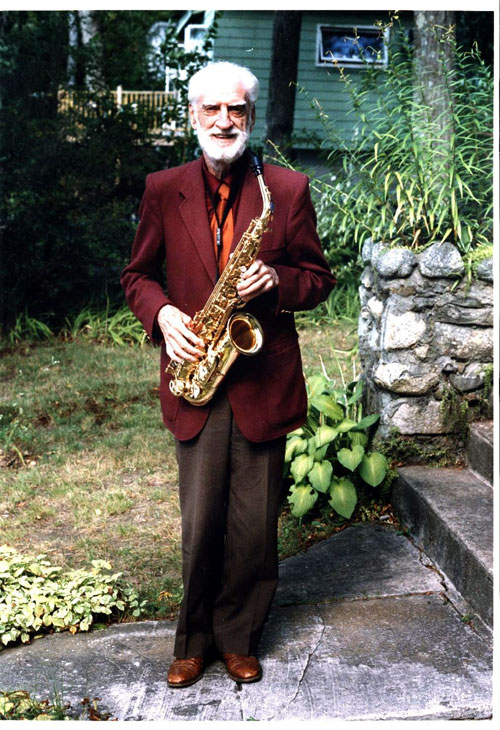 I don't remember the exact details of how I began lessons with Joe, but
it was somewhere around the age of 17 which would be about 1963. I had
studied with a local teacher in Brooklyn but needed to go further and
after speaking with several teachers in Manhattan, somehow I got to
Joe. First of all it was quite a thrill to go to Carnegie Hall Studios
on the subway-it felt heavy! My first six months of lessons were mostly
on clarinet since I at that time I thought I would major on it to get a
music degree at Queens College where I had decided to go by then, since
majoring in saxophone was not a possibility in those days
I don't remember the exact details of how I began lessons with Joe, but
it was somewhere around the age of 17 which would be about 1963. I had
studied with a local teacher in Brooklyn but needed to go further and
after speaking with several teachers in Manhattan, somehow I got to
Joe. First of all it was quite a thrill to go to Carnegie Hall Studios
on the subway-it felt heavy! My first six months of lessons were mostly
on clarinet since I at that time I thought I would major on it to get a
music degree at Queens College where I had decided to go by then, since
majoring in saxophone was not a possibility in those days
I was completely baffled by Joe's lessons. Here was supposedly the
heaviest guy in New York and all he did was tell stories about
Toscanini, Mule, Duffaye, etc., etc., and take out Gray's studies of
anatomy to show how the respiratory system and vocal cords worked. I
would play one line out of the Rose clarinet studies and that would be
it. Of course there would be fixing reeds for the last part of each
lesson. Taking the subway home and writing notes down of what I
remembered (no cassette machines then), I just didn't get it.
But I persevered and realized that Joe was ecumenical in that it didn't
matter whether you were going for jazz or classical, or played flute or
sax or clarinet. I remember seeing the Giant Steps transcription around
the studio, but realized also he was teaching the highest classical
majors at Julliard and other conservatories. Joe was about principles
and concepts-content would follow. Like all great masters, he taught by
metaphor. The stories and his amazing demonstrations were meant to
lodge in your brain till it really seeped in. The overtone exercise is
the best example of that.
Finally, years later I realized the importance of Joe's exercises and
explanations: the "fat" bottom lip, the abdominal breath, the "e"
position for the back of the tongue, anchor tonguing for the tip and
more. These were guiding principles and once understood it meant that
you were playing the saxophone as intended-as an extension of your
voice, not as some separate piece of brass that you fingered.
And Joe was a nice guy. He had a cot in the studio for cat naps because
he taught for hours on end. Sometimes you would go out while he napped
and get a soup or coffee for him. Weekly, he traveled up to Boston
staying in the dormitory at the New England Conservatory and taking a
late plane home to Jersey. He also taught at his home. Several times he
came to see me play at the Vanguard meeting Elvin Jones, at the Willow
in Boston which was a student hang out and Carnegie Hall when I played
with Miles Davis there. In fact, Miles was unusually respectful when I
introduced him. He said: "You taught Steve(Grossman) and Dave-nice to
meet you".
I stayed in touch with him and visited the home in Jersey meeting his
wonderful wife, Anne. I also spent days up in his summer home in New
Hampshire putting together the concepts and thoughts for my eventual
book and video on saxophone tone. When I saw that Alzheimer was
happening, I told Anne to get it checked because I knew it from
watching my father die that way. This was the saddest of all things-to
see Joe near the end or to watch the video, "the Master Speaks" because
you can tell he is losing it.
But my memories of him are vivid today with that impish smile, easy
laughter and a wonderfully pleasant personality. He was very hip and
knew the score, but was always a gentleman and kind to his students.
This was a true master!!